ANNUAL REPORT 2025/26
Three in every five preventable deaths are due to poor quality of care at health facilities in low-and middle-income countries in sub-Saharan Africa.
The key differentiator between the poor/low healthcare practice in SSA and the relatively higher/stronger healthcare practice in the US, Europe, or even India is the use of the science of quality improvement.
When frontline healthcare workers understand the science of quality improvement, they can study, analyse, and test solutions to the challenges in their processes and practices to make data driven decisions to improve care.
swipe to explore
2025 accomplishments
swipe to explore
The “Science of Quality Improvement” Gap in Sub-Saharan Africa
Why QI-PS is the Mechanism for Change
map / data Map showing mortality due to poor quality.

Cost of Poor Quality in LMICs
The Key Difference: QI Capacity
Frontline Workers Driving Change
Further Reading
1. Kruk ME, Gage AD, Arsenault C, et al. (2018). High-quality health systems in the Sustainable Development Goals era: time for a revolution. The Lancet Global Health.
https://www.thelancet.com/journals/langlo/article/PIIS2214-109X(18)30336-4/fulltext
Summary: Foundational paper arguing that low-income countries lack the measurement, learning, and quality improvement systems present in stronger health systems, making QI science a core systems gap.
2. Leatherman S, Tawfik L, et al. (2019). Quality healthcare in extreme adversity. BMJ Global Health.
Summary: Shows that fragile and weaker systems lack QI capability, data systems, and organisational learning structures, in contrast to high-income systems where QI science is well embedded.
3. Bradley EH, Hartwig KA, et al. (2008). Hospital quality improvement in Ethiopia: a partnership–mentoring model. International Journal for Quality in Health Care.
https://academic.oup.com/intqhc/article/20/6/392/1797854
Summary: Documents an early example of the “QI capacity gap” in Africa, showing hospitals lacked QI methods and data systems compared to U.S. institutions.
Impact Dashboard
2025 By The Numbers
In 2025, the ACQUIRE Theory Leadership Course continued to build a strong foundation in Quality Improvement (QI) and Patient Safety (PS) for healthcare workers at all levels.
Quality Improvement Theory
PS 101: Introduction to Patient Safety (No CEs)
PS 102: From Error to Harm (No CEs)
PS 103: Human Factors and Safety (No CEs)
PS 104: Teamwork and Communication (No CEs)
PS 105: Responding to Adverse Events (No CEs)
L 101: Introduction to Health Care Leadership (No CEs)
PFC 101: Introduction to Patient-Centered Care (No CEs)
QI 101: Introduction to Health Care Improvement (No CEs)
QI 102: How to Improve with the Model for Improvement (No CEs)
QI 103: Testing and Measuring Changes with PDSA Cycles (No CEs)
QI 104: Interpreting Data: Run Charts, Control Charts, and Other Measurement Tools (No CEs)
QI 105: Leading Quality Improvement (No CEs)
TA 101: Introduction to the Triple Aim for Populations (No CEs)

1,644
Trained Learners

151
Institutions Represented

13
Countries

82%
Completion Rate
A growing community of professionals committed to improving the quality of care in Africa. / space for community stories here.. quotes, or whatsapp
2026 Goals
ACQUIRE’s capacity-building targets continue to grow year on year, with 1,000 learners trained in 2024, 1,644 in 2025, and an ambitious goal of 5,000 learners by 2026. As we scale, our priority remains the same: equipping frontline healthcare workers with the knowledge and skills to lead meaningful change in their facilities and communities.
ACQUIRE’s capacity-building targets

1,000
learners trained
1,644
learners trained
5,000
learners
Equipping frontline workers to lead change
Quality Improvement Experiential
22 QI-PS projects were implemented by multidisciplinary teams in 2025. Here are a few highlights
CHANGE STORIES
SWIPE TO EXPLORE
Cure Children's Hospital
Infection Prevention

Target: Increase hand hygiene compliance among healthcare professionals from 65% to 80% within four months.
Root-cause analysis revealed barriers such as limited awareness, inconsistent commitment, poor monitoring, and inadequate availability of paper towels. In response, the team implemented a package of targeted interventions to strengthen accountability and drive behaviour change; including visual reminders, structured departmental conversations, timely dispenser maintenance, digital monitoring and feedback via Google Sheets, and recognition of hand hygiene champions. To sustain these gains, the team is integrating hand hygiene into management KPIs, embedding it in staff orientation and refresher trainings, and maintaining continuous monitoring through unit-based feedback and dashboards.
Cure Children's Hospital
Infection Prevention
Target: Increase hand hygiene compliance among healthcare professionals from 65% to 80% within four months.
Root-cause analysis revealed barriers such as limited awareness, inconsistent commitment, poor monitoring, and inadequate availability of paper towels. In response, the team implemented a package of targeted interventions to strengthen accountability and drive behaviour change; including visual reminders, structured departmental conversations, timely dispenser maintenance, digital monitoring and feedback via Google Sheets, and recognition of hand hygiene champions. To sustain these gains, the team is integrating hand hygiene into management KPIs, embedding it in staff orientation and refresher trainings, and maintaining continuous monitoring through unit-based feedback and dashboards.
The 2025 ACQUIRE Experiential Quality Improvement Leaders – Coaches Cohort
Argwings Chagwira
Bernadette Hangalla
Colleen Araka
Ednah Ojee
Gerald Muriithi
Gladys Mutisya
Lucy Simotwo
Miriam Kithuka
Mugisha Nkoronko
Olabisi Ogunbase
Samora Michelle
Walter Kiptirim
Yusra Awadh

Training Needs Assessment (TNA)
Learning – Curriculum Development
A Training Needs Assessment (TNA) revealed that although elements of Quality Improvement and Patient Safety (QI/PS) are present in both pre-service and in-service training, delivery remains fragmented andlacks standardization. Stakeholders expressed strong consensus on the importance of QI/PS training,emphasizing the need for practical, contextually relevant curricula, early integration into training programs, strong leadership support, and adaptability to diverse healthcare settings.
The assessment engaged
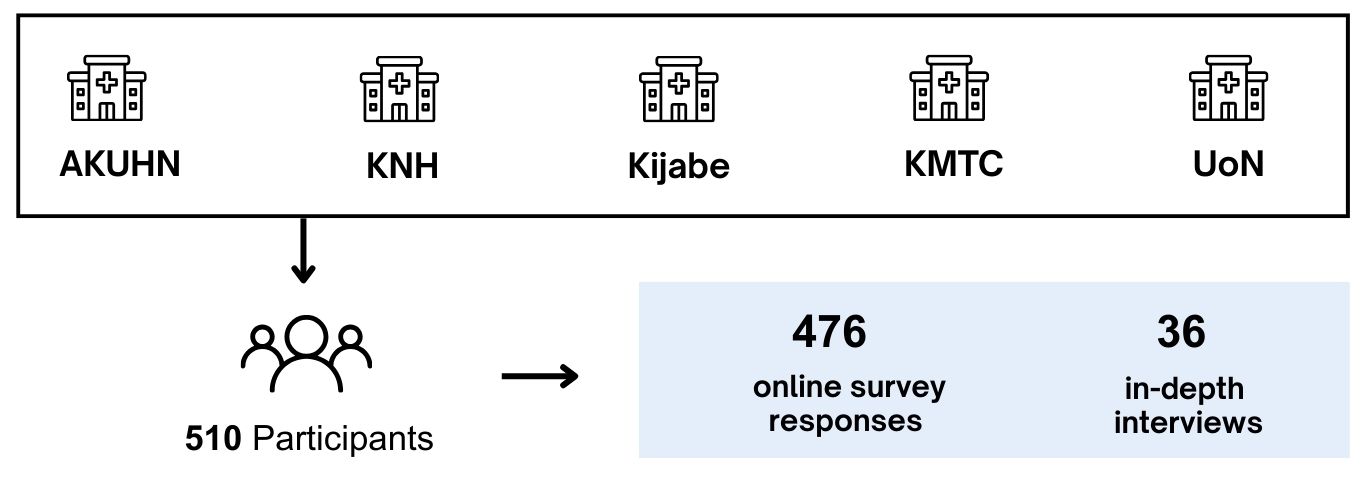
The findings provided a comprehensive understanding of the current training landscape and highlighted critical gaps and opportunities to strengthen QI/PS capacity among Kenya’s healthcare workforce.
Spotlighting Changemakers
ACQUIRE’s QI Fridays Champions
ACQUIRE’s QI Fridays initiative celebrates the healthcare workers who are applying Quality Improvement tools in practical, meaningful ways across Africa. Each weekly feature highlights a champion’s lived experience, showcasing real stories of perseverance, problem-solving, and leadership at the frontline of care. These personal narratives have become a powerful way to showcase what QI looks like in action and to inspire others to begin or deepen their own improvement journeys.
#QIChampion #QIFridays
SWIPE TO EXPLORE
In 2025, we proudly featured 40 QI Champions, each demonstrating how small, consistent changes can transform systems, teams, and patient care. Their stories continue to amplify a growing movement of healthcare workers committed to delivering safer, more reliable care across the continent.
Looking ahead to 2026, we invite more healthcare workers to join this community of change makers. Whether you’re leading a QI project or championing improvement within your facility, we welcome you to collaborate with us and be featured as a QI Fridays Champion.
The 2025 ACQUIRE
Quality Improvement Leadership Forum
Co-Producing Safer Care: Centering Quality and Kindness from the Start
SESSIONS
Global Patient Safety Action Plan: (GPSAP) 2021–2030: Translating Strategy into Action Across Africa and Beyond
Voices from the Ground Patient and provider stories on co-creating safety
Practical Tools & Frameworks. How to design for co-production in real-world settings
Incident Reporting Across Africa From Silence to Safety: Mapping African Incident Reporting
Training Needs Assessment (TNA) and Curriculum Development Building the future workforce for quality and safety
From Quality Assurance to Quality Improvement to Co-Production: A Journey Every Healthcare Worker Should Take
Exploring Generative AI’s Role in Enhancing Quality of Care: Exploring How Technology is Enabling Human-Centered Communication, Consent, and Care
Celebrating Frontline Innovation: Scientific Poster Presentations on Quality Improvement
26
Countries Represented
21
Scientific Posters Showcasing frontline innovation
30
Key note speakers
608
QI Leadership Forum Participants
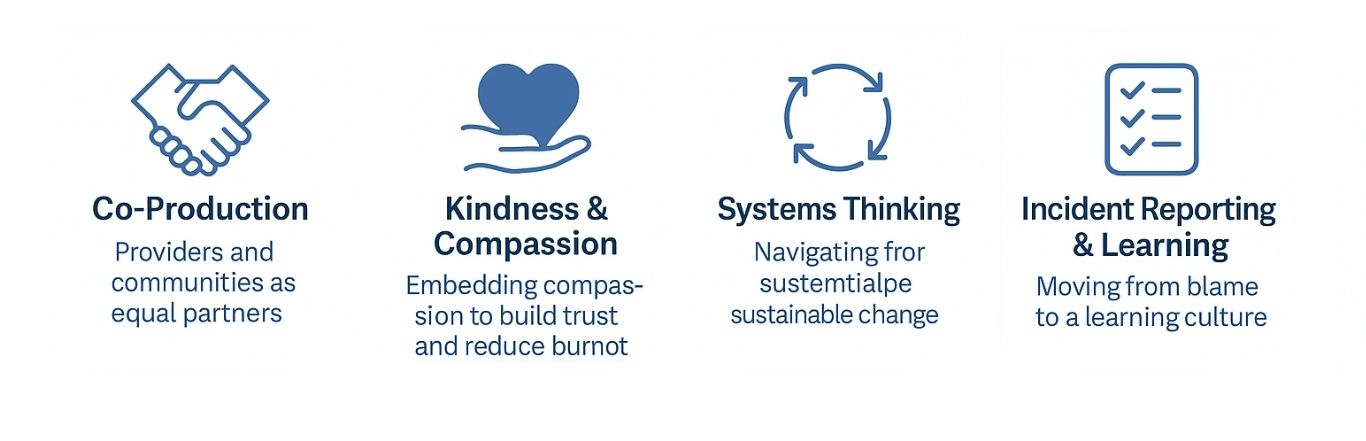
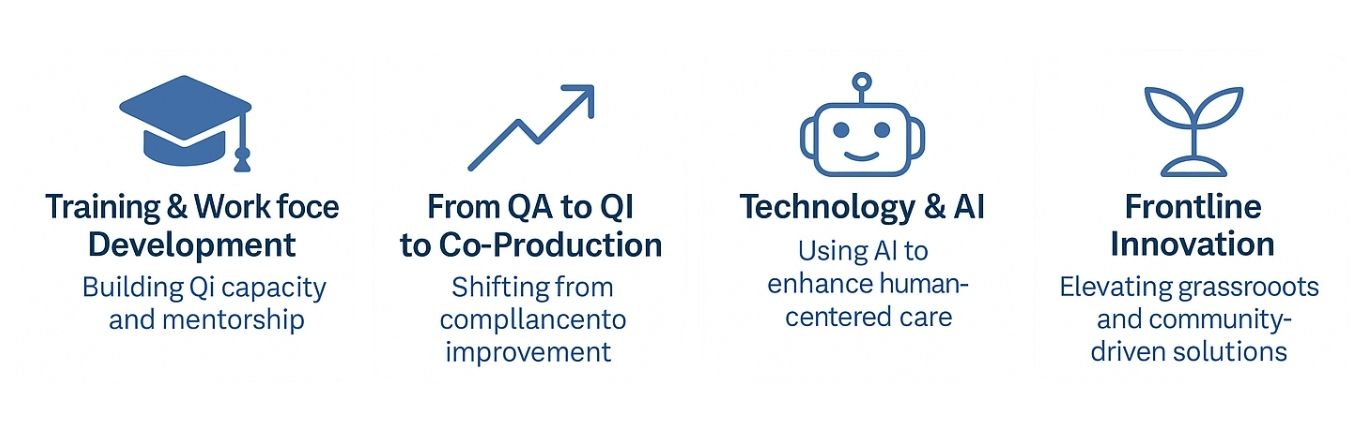
KEY THEMES
swipe to explore
Research & Publications
RESEARCH POSTERS
2925 QI Forum Scientific Posters
26 submissions, 14 showcased, from Nigeria, Kenya, Malawi, and Cameroon
ISQua submissions:
TNA study, experiential coaching model, leadership impact, maternal & newborn QI projects. ISQua AfCOP Storytelling posters
Peer-Reviewed Submissions
TNA study, experiential coaching model, leadership impact, maternal & newborn QI projects. ISQua AfCOP Storytelling posters
What We Aim to Publish Next Year (2026)
Full TNA publication and expanded institutional case studies. Longitudinal impact studies (6–12 month follow-up). Research on coaching models and experiential learning. Thematic briefs: incident reporting, communication, risk management. AI/digital learning and data-use research papers.
Systems & Leaderships
2025 board members

Co-Founder

Dr. Lydia Okutoyi
Co-Founder

Ruthpearl Ng’ang’a
Co-Founder

Prof. Elizabeth Bukusi
Certified IRB Professional.

Dr. Pete Halestrap
Family Physician

Dr. Peter Lachman
M.D. MPH. M.B.B.Ch., FRCPCH, FCP (SA)
Prof. Daniel Ojuka
Chairman of the Department of surgery, University of Nairobi
Hospitals
Asiwaju Bola Ahmed Tinubu Comprehensive Health Center
Lobatse DHMT
MCC ETI-OSA
PPC Limited – BT Health & Diagnostics Centre
St Mary’s Mission Hospital
Mbagathi County Referral Hospital
AAR Healthcare Uganda
CIHEB Kenya
Etoug-Ebe Baptist Hospital, Yaounde
General Hospital Apapa
Nazareth Hospital
Sir Ketumile Masire Teaching Hospital
St Theresa Mission Hospital – Kiirua
Chiromo Hospital
CTC Tenwek
Halisi Family Hospital
Kinango Sub-County Hospital (Level 4 Hospital)
Korlebu Teaching Hospital Polyclinic/Family Medicine Unit
LVCT HEALTH
Nairobi County – Langata Sub-county
Taita Taveta County
AAR Hospital Limited
Coptic Hospital
General Hospital Ikorodu
General Hospital Lagos
Mwai Kibaki Referral Hospital
Samburu Sub-County Hospital
Vihiga County Referral Hospital
St Francis Hospital Nsambya
Lungalunga Sub County Hospital
Mama Lucy Kibaki Hospital
Mercy James Centre for Paediatric Surgery and Intensive Care
Asutifi South DHD
Bomaa Government Hospital
Terchire Health Centre
Gyedu Health Center
Adrobaa Health Centre
Sankore Health Center
Goaso Municipal Hospital
St Elizabeth Catholic Hospital
St. John of God Catholic Hospital
Nkaseim Health Center
Lagos Island Maternity Hospital
St. Lucy Catholic Hospital
Goodhope DHMT
Military Hospital Lagos
Kalahari Health Team
Mim Polyclinic
Majete 1 Health Centre
Regional Health Directorate, Ahafo – Ghana Health Service
BEPOSO CHPS
Tano South Municipal Health Directorate
Brosankro Health Center
Derma Health Centre
Karonga District Hospital
Princess Marina Hospital
Cameroon Baptist Convention Health Services
St Wilfred’s Medical Centre
Yamfo Health Centre